
How to Save Money in Canada: The Complete Guide
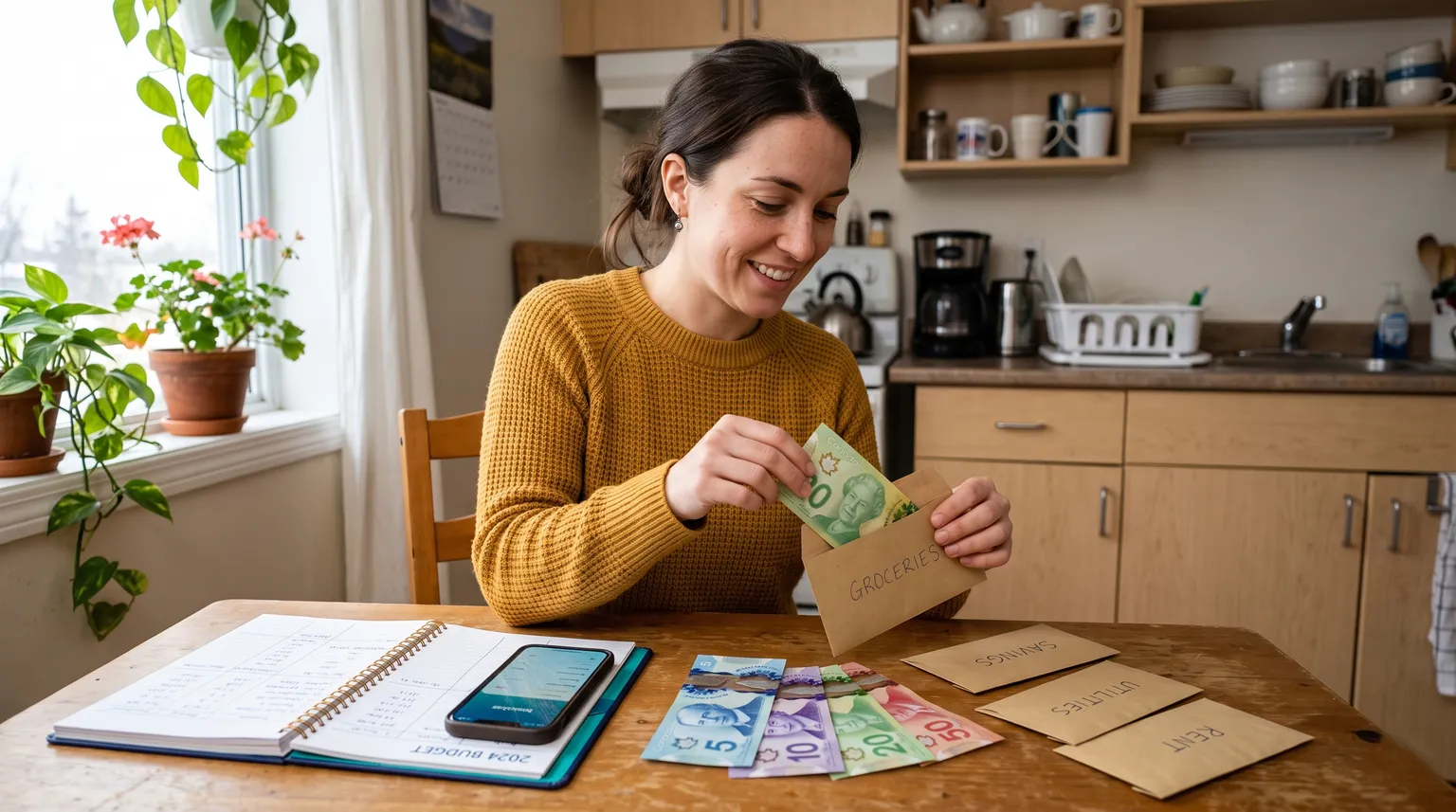
Saving money in Canada comes down to one habit: spend less than you earn, and move the difference somewhere automatic before you can spend it. Everything else, the budgets, the accounts, the apps, is just a way to make that one habit easier to keep. This guide walks through how to start saving, how much to aim for, where to keep your money in Canada, how to save for specific goals like a car or a home, and how to actually stick with it when the cost of living keeps climbing.
How do you start saving money in Canada?
The fastest way to start saving is to pay yourself first: automate a set amount to move into a separate savings account on the day you get paid, before the rest of your paycheque gets spent. Even a small automatic transfer beats a large one you mean to make later but never get around to.
Most people try to save whatever’s left at the end of the month, and most months there’s nothing left. Flipping the order fixes that. When the transfer happens automatically on payday, saving stops competing with everyday spending and becomes the first thing that happens to your money, not the last. Open a separate account so the cash is out of sight, set up an automatic transfer for the day after each payday, and start with an amount small enough that you won’t be tempted to cancel it. You can always raise it later. The goal right now is a habit you don’t have to think about, not a number that impresses anyone.
Why is it so hard to save money right now?
If saving feels impossible lately, it isn’t just you. Canadians saved just 3.5 percent of their disposable income in the first quarter of 2026, the lowest rate in two years, as the cost of essentials rose faster than incomes. When rent, groceries, and loan payments take most of a paycheque, there’s little left to set aside.
The squeeze is real. Housing, food, and borrowing costs have all climbed while wages lagged behind, so money that used to stretch to the end of the month now runs out sooner. According to Statistics Canada (opens in a new tab), the household saving rate has been sliding, and plenty of people who used to save comfortably are now just covering the basics. None of that means you’ve failed at money. It means the starting point is lower than it used to be, and the way forward is to start small and automatic rather than wait for a magic month when there’s suddenly lots left over. We dig into the causes in our guide to why it’s so hard to save money.
How much of your income should you save?
A common rule of thumb is to save about 20 percent of your after-tax income, often framed as the 50/30/20 split: 50 percent on needs, 30 percent on wants, and 20 percent toward savings and debt. It’s a useful target, not a law. The right amount is the most you can set aside consistently without blowing up the rest of your budget.
If money is tight, start small
If 20 percent is out of reach right now, ignore it. Start with whatever is genuinely sustainable, even $25 a week, and automate it. The size of that first transfer matters far less than the fact that it happens every week without you deciding. A small amount saved consistently builds the habit, and the habit is what you scale up later when a raise or a paid-off debt frees up room. Saving $25 a week adds up to $1,300 over a year, a real head start from a number most budgets can absorb.
Build a starter emergency fund first
Before you save toward anything fun, put your first savings behind a cushion. Aim for a starter emergency fund of about three to six months of essential expenses, kept somewhere safe and easy to reach, so a surprise car repair or a gap between jobs doesn’t land on a credit card. If three months feels far away, set a smaller first milestone like $1,000 and build from there. Our full guide to building an emergency fund in Canada covers the targets and where to keep the money.
What’s the best way to budget and cut expenses?
The best budget is the one you’ll actually keep. Start by tracking where your money goes for a month, then aim your cuts at the three big recurring costs (housing, transportation, and food), where small percentage changes free up real dollars. Trimming forgotten subscriptions helps, but rent and groceries are where the meaningful room is.
You don’t need a complicated system. A free tool like the federal Budget Planner (opens in a new tab) from the Financial Consumer Agency of Canada lays your income and spending out in one place and shows where it’s actually going, which is usually a surprise. Once you can see it, attack the recurring costs first: shop your phone, internet, and insurance every year or two, plan groceries around a list and the flyers, and cancel the subscriptions you forgot you had. Then automate the savings you freed up before lifestyle creep claims them. You’re not trying to live on less forever, just to move money you were spending without noticing into savings you’ll be glad to have.
Where should you keep your savings in Canada?
Match the account to the goal and the time horizon. For money you’ll need soon, like an emergency fund, a high-interest savings account keeps it safe and reachable. For longer-term goals, Canada’s registered accounts, the TFSA, FHSA, and RRSP, let your savings grow with a tax advantage. Most savers use a mix.
| Account | Best for | 2026 contribution room | Tax treatment |
|---|---|---|---|
| TFSA | Any goal, maximum flexibility | $7,000 this year ($109,000 total if eligible since 2009) | Growth and withdrawals are tax-free |
| FHSA | A first home | $8,000 a year, $40,000 lifetime | Deductible going in, tax-free out for a home |
| RRSP | Retirement | 18% of last year’s income, up to $33,810 | Deductible now, taxed when you withdraw |
| High-interest savings account | Cash you’ll need soon | No limit | Interest is taxable unless held inside a TFSA |
A few rules of thumb. If you’re not sure which to use, a TFSA is the flexible default: your money grows tax-free, you can withdraw any time without penalty, and the room comes back the following year. Saving for retirement, especially in a higher tax bracket, leans toward the RRSP, since the deduction is worth more the more you earn. The figures above are the CRA’s 2026 limits.
For the cash you want liquid, the rate matters. As of June 2026, with the Bank of Canada holding its policy rate at 2.25 percent (opens in a new tab), the best ongoing high-interest savings accounts pay roughly 2.5 to 2.75 percent, while the eye-catching offers above 4 percent are short promotions that reset after a few months. Our roundup of the best high-interest savings accounts in Canada compares the real rates and the catches. And if you’re wondering why Canadian savings options look different from American ones, our guide to how Canadian and U.S. banks differ covers the ground.
How do you save for a specific goal?
Saving for something specific works best when the goal has its own pot and a deadline. Take the total you need, divide by the number of months until you need it, and that’s your monthly target, automated like any other transfer. Keeping each goal in its own account, or at least its own tracked envelope, stops you from raiding next year’s plan for this month’s overspend.
Saving for a car
Set your budget and timeline first, then work backwards. A $5,000 used-car fund in 20 months is $250 a month. Paying with cash or a bigger down payment shrinks what you finance and the interest you pay on it. Our step-by-step on how to save for a car covers setting the target and getting there faster.
Saving for a home down payment
This is usually the biggest goal, and Canada built an account for it. The FHSA lets first-time buyers contribute $8,000 a year, up to $40,000 over its lifetime, deduct it from income like an RRSP, and withdraw it tax-free for a qualifying home, the best of both registered worlds. Our guide to saving for a house down payment in Canada maps out how much you need and how to use the FHSA to get there.
Saving for a wedding
Weddings reward an early start, because the bill is large and the date is fixed. Set the budget, divide by the months you have, and automate it into a dedicated account so the spending doesn’t land on a credit card. Our guide to saving for a wedding breaks down real Canadian costs and a savings timeline.
Saving for retirement (start in your 20s)
Retirement is the goal where starting early matters most, because decades of compounding can turn small, steady contributions into a surprisingly large balance. A little saved in your 20s, inside a TFSA or RRSP, can outgrow a lot saved in your 40s. Our guide to retirement planning in your 20s shows why time in the market beats the size of any single contribution.
How do you actually stick with saving?
Sticking with saving is less about discipline and more about design. Make it automatic so it doesn’t lean on willpower, keep it visible so you can see progress, and give yourself a reason to come back. Most people don’t quit saving because they run out of money; they quit because it’s invisible and boring.
Automation handles the willpower part. The visibility part is why a separate, named account beats a number buried in your chequing: watching a “car fund” fill up is its own small reward. The reason-to-come-back part is the one most savings plans miss. A guaranteed but tiny bit of interest gives you nothing to look forward to, which is exactly why traditional saving fizzles out. One newer Canadian approach fixes that by adding a prize: prize-linked savings rewards the money you set aside with tickets for a cash draw, so there’s a real reason to keep saving and to check in. It’s a decades-old, proven model, and you can read why a prize makes saving stick if the psychology interests you. Your money stays yours either way; the draw is upside on top.
How can Lodavo help you save in Canada?
Lodavo is a free app, built in Montreal, that makes saving more rewarding by giving you free tickets in a weekly cash draw. You link the bank account you already have through Plaid (opens in a new tab), so you can track your savings each week and earn tickets for what you set aside. The more you save, the more tickets you earn, with a chance to win up to $10,000.
The important part is that Lodavo never holds or moves your money. Your savings stay at the bank you already use, in whichever account you chose above, earning whatever interest they already earn. Lodavo isn’t a bank or a deposit account and pays no interest of its own; the weekly draw is upside layered on your normal saving. A guaranteed prize of at least $100 goes to a user every week, and payouts arrive by Interac e-Transfer or bank transfer. You can see which institutions connect on the supported banks page, check how every draw is verified on the provably fair page, and view past results under winning numbers.
Terms and conditions apply. No purchase necessary (alternate method of entry available). Skill-testing question required. Open to legal residents of Canada who are the age of majority. Odds depend on the number of eligible entries received. Full rules and odds at our contest rules.
In this guide
Show all 55 articlesShow less
Frequently asked questions
What is the 50/30/20 rule?
How can Lodavo help me save money?
Canada’s first prize-linked savings app
The more you save, the more chances you get to win
Lodavo is free. Keep saving in the account you already use, and earn free tickets in every weekly draw.


 Scan to download